As we step into 2026, the telecom industry enters at a pivotal moment where connectivity is now just the foundation and intelligence, automation and digital value creation are the future. With global operators investing heavily in AI, next-gen networks and new revenue streams, the next 12 months will define who thrives in a hyper-competitive landscape. Let's checkout the Telecom Trends 2026.
Here are the top 5 trends shaping the telecom landscape this year.
Let’s dig in!
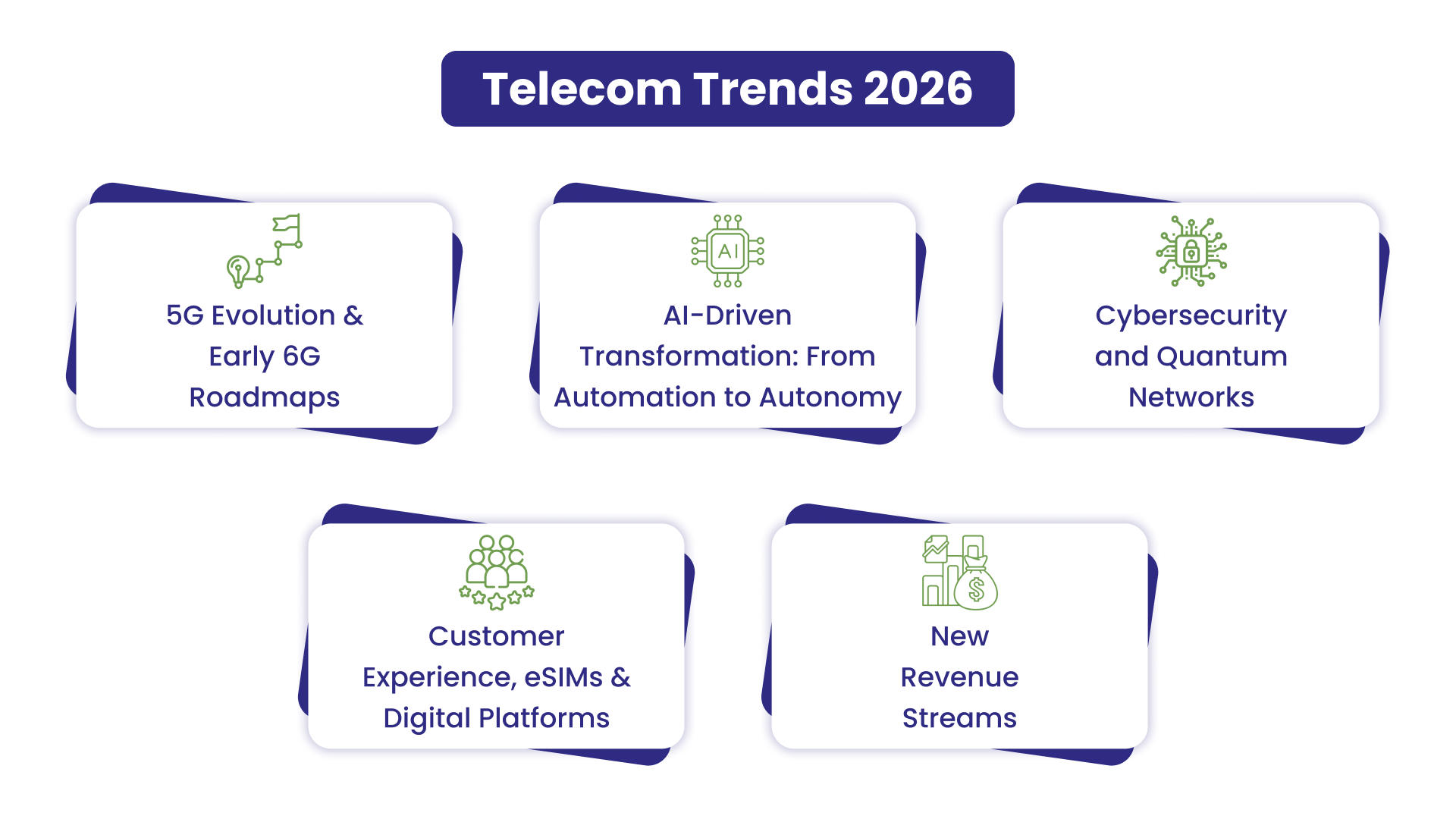
While 5G coverage continues expanding globally, 2026 marks the transition from 5G groundwork to advanced and future-ready connectivity:
Although 6G won’t be commercial until later in the decade, this year’s foundation work is critical for future mobile connectivity.
2026 is the year artificial intelligence goes beyond support tools to become the operating system of telecom networks. Operators are embedding agentic AI intelligent agents capable of multi-step decision making into core network management, customer engagement and service orchestration. This shift enables:
AI isn’t just a buzzword any more — it’s the backbone of how networks optimize themselves in real time.
As networks become smarter and more open, security complexity increases dramatically. Advanced cyber threats now target telecom infrastructure with greater sophistication, prompting:
Security is no longer a compliance checkbox but a core to trust and resilience.
The focus is shifting from raw speeds to digital-first customer experiences:
Consumer expectations are evolving fast and operators are responding with smarter, digital-centric service models.
Connectivity alone cannot sustain revenue growth. Telecom operators are pivoting toward digital ecosystem strategies:
This shift transforms operators into platform orchestrators rather than just network providers.
Telecom in 2026 is no longer just about towers and signals. It’s about intelligence, integration and innovation. Operators that successfully embed AI, expand into satellite connectivity, monetize digital experiences and secure their networks will define the next era of connectivity.
As we look ahead, one thing is clear: telecom isn’t just evolving, it’s reinventing itself for a smarter, more connected world.
Follow us on Facebook, LinkedIn, Twitter, and YouTube to get updates on the latest technological advancements in the telecom sector.